

Quick answer
Riisitunturi National Park is open in winter around the clock, 00:00–23:59 every day, with entrance free at 0 EUR. There are no gates and no ticket office. The practical limit is daylight, not access: arriving between 08:00 and 14:00 maximises usable light on short winter days for safe hiking and photography on exposed fell terrain.
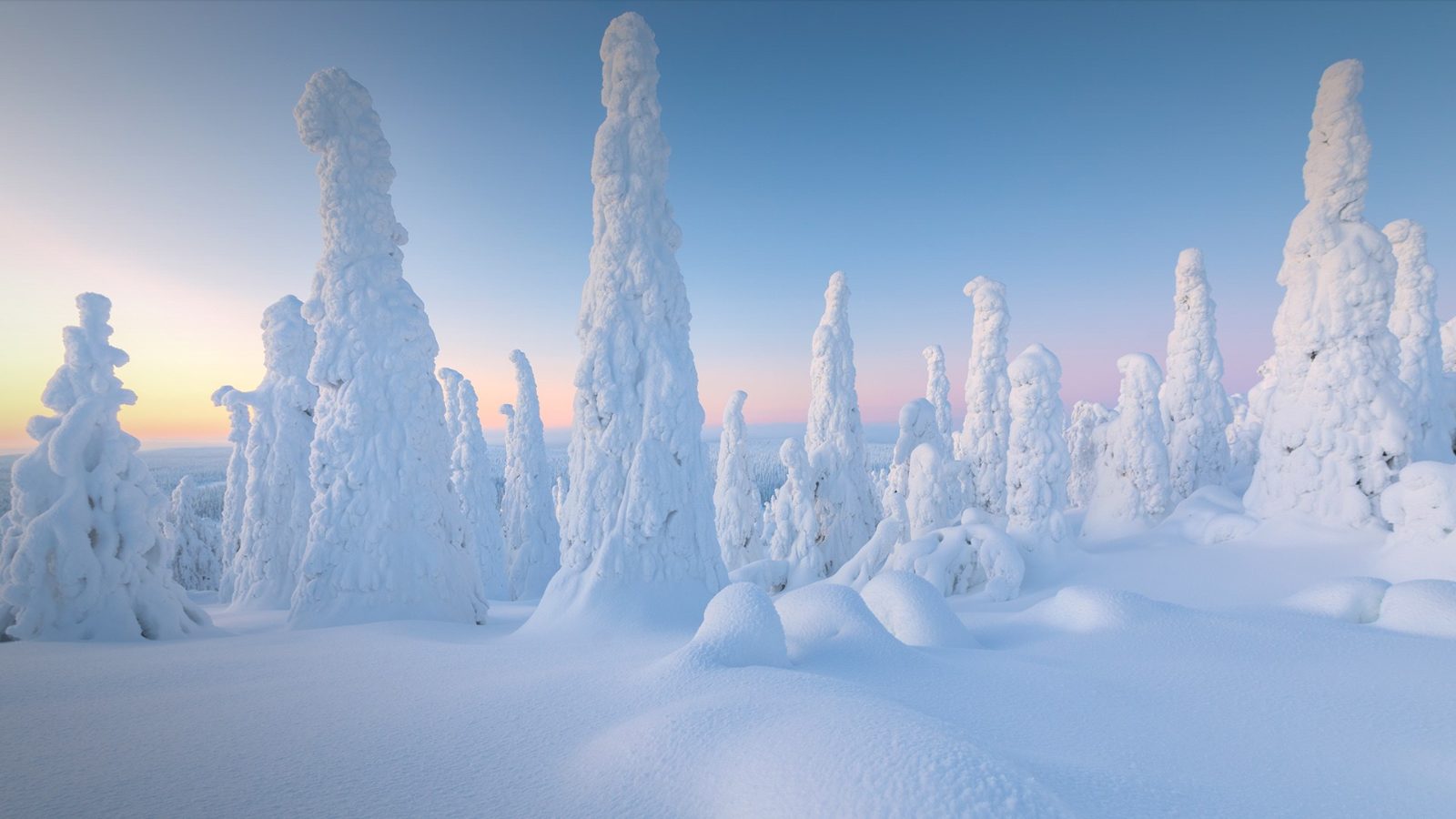
The spruces on Riisitunturi's slopes can carry several hundred kilograms of accumulated snow each, bending until the trunks arch into hooded shapes locals call tykkylumi, or crown snow-load. The phenomenon is not decorative accident. It forms where humid air off Lake Kitkajärvi rises against a fell that tops out around 465 metres, freezing onto branches in layer after layer through the polar night. Riisitunturi national park winter conditions exist because of that specific meeting of moisture, altitude and cold, which is why the effect appears here more dependably than on higher but drier fells further north. The park sits in Posio, in southern Lapland, roughly midway between Rovaniemi and Kuusamo. It is small by Finnish standards and administered by Metsähallitus, and the whole area is unstaffed. Visitors deal with an open landscape rather than an attraction: a marked route up from the roadside, the Riisitunturi open wilderness hut near the summit plateau, and aapa mire wetlands spreading below the treeline. Nothing is illuminated. In December the sun barely clears the horizon, and the blue hour that photographers travel for is also the hour in which an unprepared walker loses the trail. The Posio fell rewards planning far more than it rewards spontaneity. That context explains why the practical questions visitors ask about a Riisitunturi national park winter trip rarely concern cost or admission, both of which are settled and simple. They concern light, wind and road conditions. The plateau is exposed; gusts strip warmth quickly and can reduce visibility to a few metres while the forest below stays calm. Snow depth alters the walking surface week to week, and the ascent that takes ninety minutes in firm conditions can take twice that after fresh fall. Most people reach the park as a day trip from Rovaniemi or Kuusamo, which compresses everything into a narrow usable window. The sensible approach is to treat the drive, the walk and the return as one continuous budget of daylight rather than three separate decisions. Check the Metsähallitus updates at luontoon.fi before setting out, since trail and hut notices change through the season. Guided departures handle the timing and the transfer, which is often the difference between reaching the summit ridge and turning back at the treeline.
“The fell rewards planning far more than it rewards spontaneity.”
Optimal Timing for Visiting Riisitunturi National Park Winter
The most effective time to visit Riisitunturi National Park during winter is between January and March, when snow-covered trees are at their peak. Planning your arrival window between 08:00–14:00 is essential to maximize available daylight for navigation and photography.
January–February
MinimalCold -10°C to -25°C
Days are short with limited light for photography. Snow conditions are reliable for winter hiking.
March
ModerateChilly -5°C to -15°C
Daylight hours increase significantly during this period. The landscape features heavy, photogenic snow loads.
Weekday mornings
Low—
Mid-week visits offer more solitude on the trails. Prioritize starting by 08:00 to utilize the full light window.
Verdict: For the best photography and safety, visit between January and March, arriving during the 08:00–14:00 window.
Opening Hours at Riisitunturi National Park Winter
Riisitunturi National Park remains accessible to visitors throughout the week. The park is open daily, allowing for flexible planning of your winter excursions.
| Monday | 00:00–23:59 | |
|---|---|---|
| Tuesday | 00:00–23:59 | |
| Wednesday | 00:00–23:59 | |
| Thursday | 00:00–23:59 | |
| Friday | 00:00–23:59 | |
| Saturday | 00:00–23:59 | |
| Sunday | 00:00–23:59 |
Entrance Fees for Riisitunturi National Park Winter
Riisitunturi National Park does not charge an entrance fee for visitors. Access to the trails and natural areas is free of charge for everyone throughout the winter season.
A typical adult pays 0 EUR, as there are no entrance fees or tickets required to access the park.
Navigating to Riisitunturi National Park Winter
Riisitunturi National Park is located in Posio, Lapland, and is most easily accessed by private vehicle or organized transport. The trailhead is situated at the end of Riisitunturintie.
Drive via road 941 (Posio) to Riisitunturintie
Private transfer from Rovaniemi or Posio
Public transport to Posio center, followed by a local taxi
Essential Preparation for Riisitunturi National Park Winter
Winter temperatures at Riisitunturi regularly drop below -20°C on the open fell, so gear and safety checks matter more than anything else you pack.
-
Reserve snowshoes weeks ahead — Snow on the fell is deep and unpacked, and rental stock in Posio is limited.
-
Layer wool or synthetic base layers — Cotton holds sweat against the skin and drives heat loss fast once you stop moving.
-
Pack an insulated shell and mittens — Wind on the exposed summit plateau makes still-air temperatures feel considerably colder.
-
Bring boots rated to -30°C — Standard winter footwear loses insulation during long stops for photography.
-
Charge and insulate camera batteries — Lithium cells drain within minutes in deep cold, so keep spares inside inner pockets.
-
Carry a headlamp with fresh batteries — Daylight is short in midwinter and fades quickly once you leave the summit.
-
Arrive between 08:00 and 14:00 — This window maximizes usable daylight for safe hiking and photography.
-
Tell someone your route and return time — Mobile coverage on the fell is patchy and trails see few other hikers midweek.
Check availability
Frequently asked questions about riisitunturi national park winter
Everything you need to know about riisitunturi national park winter